

Link building is the practice of earning links from other websites to your own, so search engines and readers treat your pages as credible sources worth surfacing. This guide is for founders, marketers, and operators who want backlinks that hold up over the years rather than the kind that trigger a penalty. It covers why links still matter, the difference between earned editorial links and manipulative schemes, the white-hat tactics that actually work, how to read a single link opportunity, and how to measure progress honestly. It also covers where link building goes wrong, and Google's own position on link spam.
The short version
- Volume is the wrong goal. A handful of relevant, editorially given links outperform hundreds of low-quality ones, and Google's guidance points the same way.
- Links you buy or trade at scale are a liability, not an asset. Link schemes violate Google's spam policies and can drag an entire site down.
- The best links are a byproduct of something worth linking to. Digital PR and genuinely useful assets earn links you cannot otherwise buy.
- Relevance beats raw authority. A link from a smaller site in your field often carries more weight than a big-name link with no topical fit.
- Measure referring domains and their quality, not the total link count. One number flatters you; the other tells the truth.
What is link building, and why do backlinks still matter?
Because links are still one of the clearest ways the web signals trust. When a credible site links to a page, it is telling both readers and search engines that the page is worth reading, and Google has used that signal since its earliest days. Backlinks do three jobs at once: they help search engines discover new pages, they pass authority from one site to another, and they act as third-party trust that content alone cannot manufacture.
The honest caveat: links are not the only ranking factor, and their weight has shifted as search has matured. Content relevance, search intent, and technical health all sit alongside links, and a strong link profile cannot rescue a page that answers the wrong question. Our complete guide to SEO maps how these pieces connect. Treat links as one pillar of a system, not the whole building.
What makes a backlink actually valuable?
Relevance and editorial intent, far more than domain size. A link earns its weight when a real editor or author chose to place it because it genuinely helps their reader. Four factors decide whether a link is worth pursuing:
- Relevance. Is the linking page about your topic, or at least adjacent to it? Topical fit is the factor most people underweight and the one that ages best.
- Authority. Does the linking site have its own earned reputation, or is it a thin site built to sell links? Authority matters, but only on top of relevance.
- Traffic. Does the linking page get real visitors who might click through? A link that sends qualified referral traffic has value even if it moved no rankings.
- Editorial standards. Would this site link to anyone who paid, or only to sources it vetted? The harder a link is to buy, the more it is worth.
Our recommendation: when two opportunities compete for the same hour of outreach, pick the more relevant one, even if its authority metric is lower.
What is the difference between earned links and link schemes?
Intent and disclosure. An earned, editorial link is one a publisher gives because your content deserves the citation. A link scheme is any arrangement designed primarily to manipulate rankings: buying links, excessive link exchanges, private blog networks (PBNs), or large-scale automated link creation.
The line is not always about money changing hands. A sponsored placement is fine when it is disclosed and attributed correctly. The problem is passing a paid or manufactured link off as an editorial endorsement. Google's Search Essentials spell out the spam policies that govern this, and link schemes are named explicitly among them.
We will say this plainly, because plenty of vendors will not: buying links in bulk and renting space on PBNs is a bad long-term bet. It can work briefly, then cost you a manual action or an algorithmic slide that takes months to recover from. If a provider sells links by the hundred, walk away. If you do want to hire someone, what a link building service should include and cost is a separate question.
Which white-hat link building tactics actually work?
Four categories cover almost everything that works: digital PR and data-led campaigns, linkable assets such as original research and tools, guest contributions on relevant, edited sites, and link reclamation, including unlinked mentions and broken links. Buying links or renting PBNs sits outside all four and violates Google's policy. Which of these you should actually run depends on your domain authority, your team and how much you can publish, so we have set the choice out tactic by tactic in how to get backlinks.
How does digital PR earn links at scale?
By creating stories and data that journalists want to cite, then pitching them to real newsrooms. Digital PR is the most reliable way we have seen to earn links from high-authority sites that would never sell one, because the link is a natural citation of your research, survey, or expert take.
The mechanics are simple to describe and hard to execute: produce something genuinely newsworthy (original data beats opinion), build a short list of relevant reporters, and pitch a story rather than a link. When it lands, one campaign can earn coverage across dozens of publications. Our digital PR guide walks through the full workflow. A Wikipedia page is sometimes pitched as a shortcut into this same league of high-authority links, but it isn't one: every external link on Wikipedia carries rel="nofollow", so it is worth reading the Wikipedia notability test for SaaS companies before that budget gets spent chasing an article instead of coverage that actually passes link equity.
The trade-off: digital PR is the highest-effort tactic on the list, and not every business has a story to tell. If you cannot point to proprietary data or a genuine expert angle, start with linkable assets instead and build the PR muscle later.
How do you reclaim links you have almost earned?
By finding the near-misses and closing the gap, which is the highest return-per-hour work in link building. Three reclamation plays deserve a standing place in your process.
Unlinked mention reclamation
Someone already mentioned your brand, product, or research but did not link to it. Whether the link is worth chasing depends on the mention, and our guide to what brand mentions are worth with and without a link works through that decision. As a link tactic, reclamation converts well, because the editorial decision to cite you was already made.
Broken-link building
Find a dead link on a relevant page, confirm you have a resource that fits, and suggest yours as the replacement. Our guide to broken link building covers how to qualify an opportunity before you send anything.
Link reclamation
Links break. Site migrations, redesigns, and deleted pages quietly strip away links you already earned. Our guide to link reclamation covers how to find the lost links and how to choose between restoring the page, redirecting it, and letting it go.
How should you handle link attributes on the links you earn?
Use the right rel attribute for the link's nature, and do not try to dictate the words. Asking every publisher for the same exact-match phrase is the pattern Google's own policy names, and our guide to anchor text covers what you can reasonably request.
The link attributes tell Google how to treat a link. A standard editorial link needs no special attribute and passes signal by default. The three rel values below cover the cases where it should not.
| Attribute | What it tells Google | When to use it |
|---|---|---|
dofollow (default, no attribute) | An editorial endorsement that passes ranking signal | Genuine citations you vouch for |
rel="nofollow" | A hint not to pass ranking signal | Links you cannot fully vouch for |
rel="sponsored" | The link is paid or compensated | Ads, paid placements, affiliate links |
rel="ugc" | The link came from user-generated content | Comments, forum posts, profile links |
Using rel="sponsored" on paid links is not optional politeness; it is how you stay on the right side of Google's guidelines while still running paid placements. Disclose, attribute, and you keep the placement clean.
How do you evaluate a single link opportunity?
Run it through the same four filters every time, in order, and stop at the first hard no. Relevance first: if the linking page has nothing to do with your topic, the rest does not matter. Then authority: does the site have earned standing, or is it a link farm dressed up? Then traffic: would a real reader ever click this link? Then editorial standards: is this a site that vets what it links to, or one that links to anyone who asks?
If an opportunity clears all four, pursue it. If it fails relevance or editorial standards, decline it even when the authority number is tempting. A pile of high-authority links from unrelated, link-selling sites is exactly the pattern that looks manipulative in aggregate. Internal links follow their own logic; our internal linking guide covers how to route authority once it arrives on your site.
What does Google say about link spam?
That links intended primarily to manipulate rankings violate its spam policies. Google's Search Central documentation is explicit: buying or selling links that pass ranking signal, excessive link exchanges, large-scale article campaigns with keyword-rich anchors, and automated link creation all count as link spam.
Two practical implications follow. First, its spam-fighting systems are designed to devalue manipulative links rather than reward them, so a bought link often does nothing even before it does harm. Second, when you do sell or accept paid links, qualifying them with rel="sponsored" or rel="nofollow" keeps you compliant. The safest reading of Google's stance is simple: earn links, disclose paid ones, and never try to fake an editorial endorsement.
How do you measure link building without fooling yourself?
Track referring domains and their quality, not the raw number of backlinks. A thousand links from ten domains is far weaker than fifty links from fifty relevant, credible domains, yet a total-link count hides that difference completely. The metrics worth watching:
- Referring domains. How many distinct sites link to you, and are they growing steadily and relevantly?
- Relevance of linking sites. Are new links coming from your field, or from unrelated directories and low-quality blogs?
- Referral traffic. Are any of these links sending real visitors? Third-party authority scores are estimates, but referral clicks are facts.
- Ranking and impression movement. Do the pages you built links to actually gain visibility over the following months?
Third-party authority scores from tools like Ahrefs or Moz are useful for triage, but treat them as estimates rather than Google metrics. They are directional, not the score Google uses.
When should you not chase links, and what goes wrong?
When the page you are linking to is not ready, or when the tactic risks more than it returns. Link building amplifies a page; it cannot fix a weak one. Before earning links, make sure the target page answers its query well, because links to a thin page just spend authority poorly. The most common mistakes we see:
- Chasing volume. Bulk links from irrelevant sites do little and can look manipulative in aggregate.
- Buying links or using PBNs. The short-term lift is real; so is the eventual penalty risk. Not worth it for a business that plans to exist next year.
- Over-optimized anchor text. Exact-match anchors at scale are one of the loudest manipulation signals there is.
- Ignoring lost links. Failing to audit for broken and lost backlinks means quietly leaking authority you already earned.
- Linking to unready pages. Sending hard-won links to a page that cannot convert or rank wastes the effort.
The uncomfortable truth: most link-building failures are not aggressive enough to get penalized. They just waste months on links that were never going to move anything. This section covers links you build; our guide to what to do about the bad links already pointing at you covers the opposite problem, and Google's own answer to it is narrower than most people expect.
The one habit worth building: judge every link by whether a real editor would give it for a real reason. That single question filters out almost every tactic that leads to trouble and keeps you focused on the ones that compound. This week, run a search for your brand name, find the unlinked mentions, and send three short notes asking each author to turn the mention into a link. It is the fastest, lowest-risk link work available, and it will show you how link building feels when the citation was already earned.
Make the Links You Earn Count
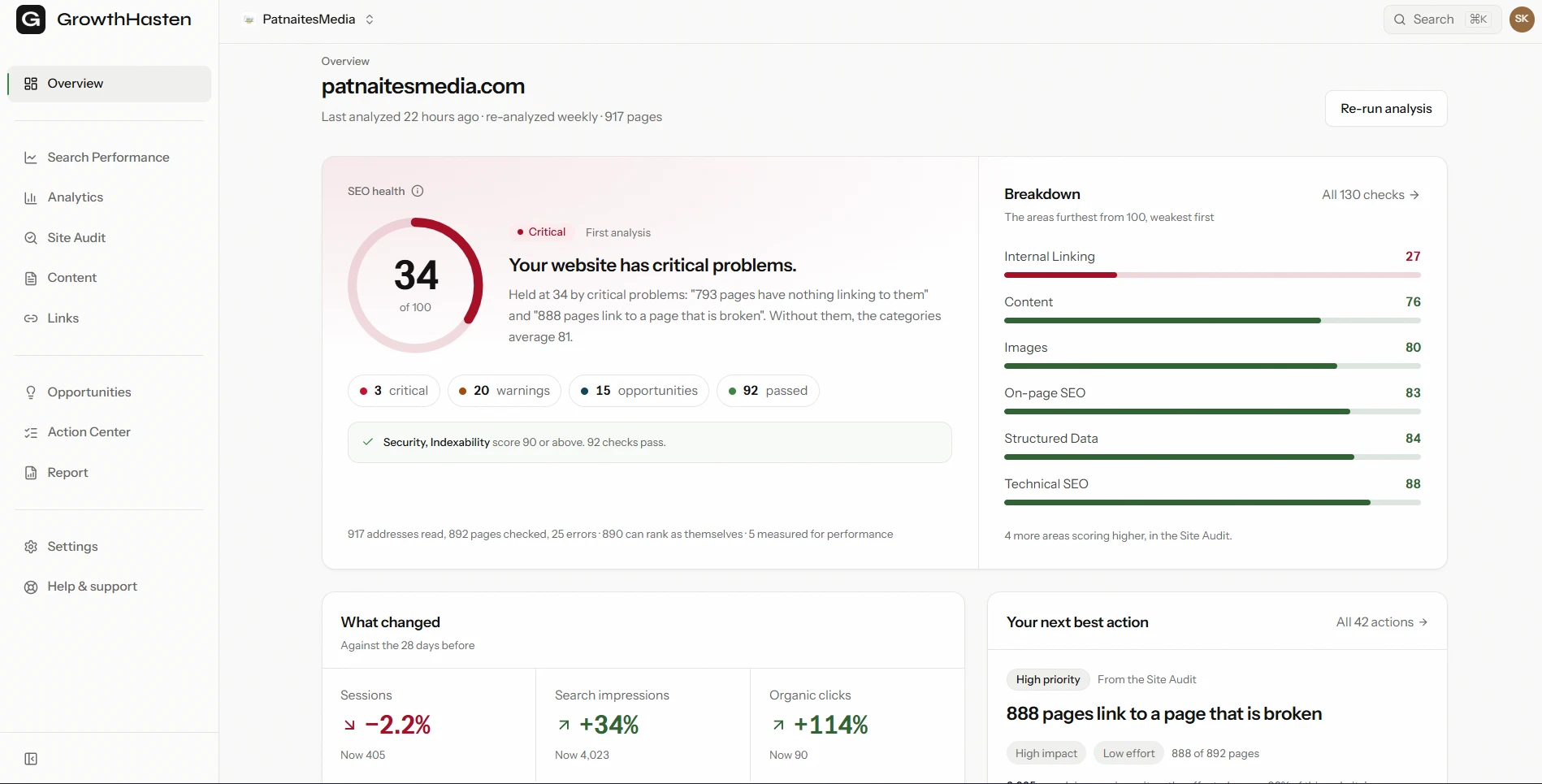
Earned links land on pages that pass authority on through your internal links. GrowthHasten's Links section maps that internal link graph, finds the pages nothing links to, and proposes specific internal links with the reasoning on every row. It does not build or buy backlinks.
Explore the Links SectionQuestions
Frequently asked questions
Do backlinks still matter for SEO?
Yes. Links remain one of the clearest signals search engines use to discover pages, pass authority, and gauge trust. Their weight has shifted as search matured, and they now sit alongside relevance, intent, and technical health rather than dominating. A strong link profile cannot rescue a page that answers the wrong question, but relevant editorial links still help good pages rank and get found.
What is the difference between white-hat and black-hat link building?
White-hat link building earns links by creating something worth citing, then reaching the right people through digital PR, useful assets, and outreach. Black-hat link building manipulates rankings through bought links, private blog networks, link exchanges, and automated placement. Google's spam policies treat manipulative links as violations that can lower rankings or trigger a manual action, so the short-term lift rarely survives contact with an algorithm update.
Are paid links against Google's guidelines?
Paid links that pass ranking signal violate Google's link-spam policies. You can still run paid placements and affiliate links, but you must qualify them so they do not pass signal. Add rel="sponsored" for paid or compensated links, and use rel="nofollow" where appropriate. The line is disclosure: passing a paid link off as an editorial endorsement is the part Google treats as spam.
How many backlinks do I need to rank?
There is no fixed number, and chasing one leads to the wrong tactics. Rankings depend on relevance, intent, content quality, and competition, not a link count. A few relevant links from credible sites usually outperform hundreds of low-quality ones. Focus on how many distinct, relevant referring domains you earn and whether they send real traffic, rather than a total link total you can inflate cheaply.
What is the fastest safe way to earn links?
Unlinked mention reclamation. Where your brand is already named without a link, asking the author to add one converts well, because the editorial decision is already made. Broken-link building and link reclamation from lost backlinks are the next-fastest safe plays, since both help publishers fix a genuine problem.

Written by
GrowthHasten Team
Editorial Team, GrowthHasten
Articles from the GrowthHasten editorial team, grounded in primary research, our own testing, and what analyzing real websites shows, fact-checked in-house.
View profile